I. The Thirteen-Year-Old Who Became Jagadguru
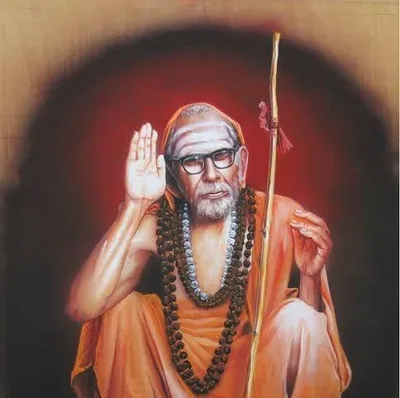
His Holiness Kanchi Paramacharya — Mahaperiyava
The story of how Swaminathan Shasthri became the 68th Shankaracharya of the Kanchi Kamakoti Peetham at the age of thirteen is one of the most dramatic episodes in the institutional history of Tamil spiritual life — and it has the quality of those stories in which the ordinary biographical logic of preparation, choice and appointment gives way to something that feels like destiny.
Swaminathan was born on 20 May 1894 in Villupuram, South Arcot District, Tamil Nadu — into a Kannada-speaking Hoysala Karnataka Brahmin family that had migrated to Tamil Nadu generations earlier. His father, Subrahmanya Sastri, was a District Education Officer. The family was cultured, learned, steeped in the Vedic tradition. Swaminathan was a bright student at the Arcot American Mission High School in Tindivanam, where his father was posted.
In 1906, the 66th Acharya of the Kanchi Kamakoti Peetham was camping in Perumukkal, a small village near Tindivanam, observing the Chaturmasya vrata (the four-month monsoon retreat during which a sannyasi stays in one place). The Acharya attained Siddhi (died) in Kalavai shortly after. In extraordinary rapid succession, Swaminathan's maternal cousin was installed as the 67th Acharya — and died after a brief illness of seven days. The Peetham was in crisis.
A messenger came to fetch Swaminathan from Tindivanam. He was told, gradually, in a bullock cart as it rolled through the countryside, that his cousin had died and he was being taken to be installed as the next Acharya. He was thirteen years old. In his own recorded account, he lay in a kneeling posture in the cart, repeating the name of Rama — the only prayer he knew.
On 13 February 1907, Swaminathan ascended the Kanchi Kamakoti Peetham as the 68th Acharya, receiving the Sanyasa name Chandrasekharendra Saraswati. He would hold this position for eighty-seven years — the longest reign of any Shankaracharya in the recorded history of any of the four Mathas established by Adi Shankaracharya.
II. The Institution — What He Inherited and What He Built
The Kanchi Kamakoti Peetham traces its origin to Adi Shankaracharya — the 8th-century philosopher-monk who reformulated and revitalised the Advaita Vedanta tradition and, according to tradition, established four Mathas (monastic institutions) at the four cardinal points of India to preserve and propagate the teaching. The Kanchi Matha — located in Kanchipuram, one of the seven sacred cities of Hinduism and the ancient capital of the Pallava dynasty — is the southern institution of this network.
The Kamakoti Peetham claims an unbroken line of succession of Acharyas since its founding — a claim that, if accurate, makes it the oldest continuously functioning monastic institution in Tamil Nadu. Whether this specific claim is historically verifiable in every detail is debated by scholars; what is not debated is that by the time the young Swaminathan ascended the seat in 1907, the institution was ancient, venerable and in need of vigorous leadership.
What the thirteen-year-old pontiff inherited was an institution with great prestige but limited resources — the court initially placed it under the Guardian and Wards Act and appointed an external guardian to administer its affairs. What he built over the following eight decades was a Peetham that became one of the most influential spiritual institutions in South India, a source of guidance, education, cultural revival and social service across Tamil Nadu and beyond.
III. The Walking God — Parivrajaka Across India
The title by which Mahaperiyava is perhaps most characteristically known is Nadamadum Deivam — the Walking God. This is not merely a poetic epithet. For decades, Chandrasekharendra Saraswati travelled across India primarily by foot, in the traditional manner of a Vedic sannyasi — the parivrajaka or wandering monk who carries the teaching from place to place and sustains the spiritual life of the communities he passes through.
True to the tradition set by Adi Shankaracharya, he travelled throughout the country by foot or by the traditional palanquin, delivering discourses on verandahs, riverbanks and smaller halls — never in the grand stadiums or specially constructed pandals of later spiritual tourism. The discourses were not performances. They were conversations — with householders, scholars, farmers, politicians, artists, the poor and the powerful — always in the language of the listener, always addressing the specific questions and conditions of the place he was visiting.
During the Swadeshi movement period, he discarded foreign cloth — but characteristically, he did not burn it (as many nationalist protesters did) but immersed it in water. The gesture was both a statement of alignment with the independence movement and an expression of the non-violent quality that characterised everything he did. He began wearing Khadi — the hand-spun cloth associated with Gandhi's movement — and maintained this practice throughout his life.
Paul Brunton's Account — A Search in Sacred India (1931)
Paul Brunton — the British writer and spiritual seeker who had spent years in India and was a close student of Ramana Maharishi — visited Chandrasekharendra Saraswati in 1931 and recorded his first impression: "His noble face, pictured in grey and brown, takes an honoured place in the long portrait gallery of India's spiritual aristocracy."
The meeting between Brunton — who came from the tradition of the Western philosophical seeker — and the Kanchi Paramacharya — who embodied the unbroken Sanskrit-Vedic tradition of South India — was a kind of cultural encounter that played out countless times over the Paramacharya's long life: the Western or Western-influenced mind encountering something it recognised as profoundly real, but could not fully categorise within its existing frameworks.
Albert Franklin, the Consul General for the United States at Madras, who met Mahaperiyava, recorded: "I saw Lord Christ in the Swami." The observation is striking in its specificity — not "I saw a great religious figure" or "I was deeply moved," but a direct recognition across the boundary of religious tradition. What Franklin was naming, it seems, was the quality of absolute self-giving, of presence fully in service of others, that he associated with the figure of Christ — and found equally present in the Tamil Shankaracharya.
IV. The Teachings — Deivathin Kural, the Voice of God
The primary record of Chandrasekharendra Saraswati's teachings is the multi-volume Tamil work Deivathin Kural — Voice of God — compiled from his discourses by his disciple R. Ganapathi and published in both Tamil and English. The title is deliberate: Deivathin Kural echoes and honours the Thirukkural of Thiruvalluvar — the title itself suggesting that these discourses are to the modern period what Thiruvalluvar's couplets are to the ancient one: the essential voice of Tamil spiritual wisdom.
The discourses range across an extraordinary range of subjects: the Vedic tradition and its relevance, the principles of Advaita Vedanta, the practice of dharma in daily life, the importance of Sanskrit and Tamil learning, the ethics of governance, the duties of different communities, ecology and the protection of nature, mathematics, science, music, art, temple worship and its inner significance. The breadth is characteristic of the Shankaracharya tradition — the pontiff as the point of integration for the entire cultural, intellectual and spiritual life of the community.
The central intellectual commitment is to Advaita Vedanta — the non-dual philosophy of Adi Shankaracharya. But Mahaperiyava's Advaita is not purely philosophical. He was deeply committed to the practical dimensions of the tradition: the performance of Vedic rituals, the maintenance of the Agamas (temple liturgical texts), the practice of daily worship, the preservation of Sanskrit and Tamil learning. For him, the philosophical insight of non-duality and the ritual life of the householder and the temple were not in tension — they were the inside and outside of the same reality.
V. The Ten Commandments — Dasopadesam
Among the most widely circulated of Mahaperiyava's teachings are the ten simple practical guidelines he offered his followers — known as the Dasopadesam. These are drawn from his various discourses and represent the condensed practical wisdom of a life spent observing how human beings go wrong and how they can go right:
Dasopadesam — The Ten Guidelines of Mahaperiyava
VI. Maitreem Bhajata — The Composition for the United Nations
The most widely known composition of Chandrasekharendra Saraswati is Maitreem Bhajata — a Sanskrit prayer for world peace, composed in a simple but exquisite raga setting. The text translates as: "O World, cultivate peace. Abandon all enmity. Offer worship to the Lord of the Universe. May the streams of grace flow over all. May there be no sorrow in the world."
MS Subbulakshmi — who was a devoted student of Mahaperiyava — chose this composition as the centrepiece of her performance at the United Nations General Assembly on 23 October 1966, at the invitation of Secretary-General U Thant. The choice was deliberate and precise: a Tamil singer, before the assembled representatives of every nation on earth, singing a prayer for peace composed by her Tamil spiritual guide — in Sanskrit, the language that bridges the entire Indian civilisation.
The moment is one of the most significant cultural intersections in the history of Tamil civilisation's relationship with the world. A composition by the Kanchi Paramacharya, sung by his devotee MS Subbulakshmi, addressed to the world from the floor of the United Nations. The prayer has since become one of the most widely performed Sanskrit devotional compositions, sung at interfaith gatherings, peace events and cultural programmes across the world.
Maitreem bhajata, akhila hrij jaitrim / Atmaiva sarva bhutesu brajantim / Vishvam samastat sukhino bhavantu
— Chandrasekharendra Saraswati, Maitreem Bhajata (O World, cultivate peace — may all beings in every heart rejoice, may the entire world be in happiness)
VII. The Doctor and the Poor — Small Stories, Large Character
The literature of devotion to Mahaperiyava is full of stories that reveal his character more precisely than any formal biographical account. Two are worth pausing on.
When the daughter of the communist leader P. Ramamurti — a doctor named Dr. Ponni — came for his darshan, he asked how she charged her patients. She replied that she took money only from the rich and charged the poor only for medicine. He suggested she treat the poor entirely free. She was stunned, she said later — even her father, a committed socialist, had not thought on those lines. The Paramacharya's response went beyond political ideology to the simple arithmetic of love: if you can serve, serve completely.
The second story is from his childhood in Tindivanam. An old woman selling snacks on the street approached the young Swaminathan and asked him to buy some murukku. He tried to negotiate a lower price. She refused and walked away, saying sharply — in the Tamil idiom of the market woman dealing with a difficult customer — "I don't mind if you don't buy, and certainly I don't welcome you with poornakumbam to buy my items." The young Swaminathan smiled and said: "Mind your words, patti." The story reveals two things: the ordinary human texture of his early life, and the quality of equanimity with which he received even a market woman's sharpness — without anger, with amusement, with the simple reminder that words matter.
VIII. The Reconversion — F.G. Natesa Iyer
One of the most documented episodes in the Paramacharya's early life involves the Indian National Congress leader F.G. Natesa Iyer of Tiruchirappalli — at the time both a leading Congress activist and the elected Mayor of the city. Natesa Iyer had been taken in as a child of ten by English missionaries, was brought up by them and converted to Christianity. Twenty years later, dissatisfied with the ability of Christian priests to resolve his deepest philosophical questions, he went to the Kanchi Shankaracharya.
The meeting resolved his doubts. He reconverted to Hinduism. And in the 1920s, when the Non-Cooperation Movement was organising street protests across Tamil Nadu, Natesa Iyer used his position as chairman of a reception committee for the Paramacharya's visit to Tiruchirappalli to unite the political movement with a public expression of devotion. The episode illustrates the Paramacharya's reach across the divisions of the colonial period: political leaders, Western-influenced intellectuals, traditional scholars — all found something essential in him.
IX. 87 Years — What That Span Means
Chandrasekharendra Saraswati headed the Kanchi Kamakoti Peetham from 1907 to 1994 — eighty-seven years. To understand what that span means, consider what happened in Tamil Nadu, in India and in the world during those years: the final decades of British colonial rule, the independence movement, the partition, the making of the Indian constitution, the integration of princely states, the Dravidian movement and the transformation of Tamil political culture, the Green Revolution, the Emergency, economic liberalisation, the rise of Hindu nationalism. Through all of it, the Kanchi Paramacharya was there — not as a political actor but as a still point, a presence whose consistency and continuity was itself a form of cultural stability in a period of rapid and often violent change.
He was a child when Queen Victoria's son Edward VII sat on the British throne. He died in the year that Nelson Mandela became president of South Africa. The 20th century in its entirety — from its Edwardian beginnings to its post-Cold War end — passed before him. And in all of it, he sat on the ground, received visitors, gave discourses, composed prayers, walked across the country on bare feet, and taught what Adi Shankaracharya had taught in the 8th century: that the Self of all beings is one, that the diversity of appearance is the play of a single consciousness, and that the most important thing a human being can do is to recognise this and live accordingly.
X. Justice M.M. Ismail and the International Message
Justice M.M. Ismail — former Chief Justice of the Madras High Court — writing in the Tamil weekly Kalki in May 1977 about the Paramacharya, identified his most essential quality: he is the one who always dreams of a world bound by moral law. This is the precise description: not a mystic withdrawn from the world, not an ideologue pursuing power, not a sectarian leader defending a tradition against rivals — but someone whose entire life was organised around a single dream: that human beings could choose to live by moral law rather than by force, appetite or fear.
Sri Agnihotram Ramanuja Thatachariar — one of the great Sanskrit scholars of 20th-century Tamil Nadu — called him the "Ideal Prophet of our times." The word "prophet" is significant: not a contemplative, not merely a teacher, but a prophetic voice — one who speaks what is needed precisely in the time and place in which it is needed.
Chandrasekharendra Saraswati attained Samadhi on 8 January 1994 — just months before his 100th birthday. He had served as the head of the Kanchi Kamakoti Peetham for nearly nine decades, having ascended the seat as a thirteen-year-old boy repeating the name of Rama in a bullock cart. His successor, Jayendra Saraswati, continued the Peetham's work. His discourses in the Deivathin Kural remain the most widely read modern Tamil text on Hindu philosophy and dharma.
Mahaswami and Paramacharya are his other well-known appellations. The devotion, fervour, and intensity with which the Paramacharya practised what Sankara had taught are considered to be unparalleled by his devotees. Throughout his life, the focus of his concern and activities was rejuvenating Veda adhyayana, the Dharma Shastras, and the age-old tradition, which had suffered decline.
MS Subbulakshmi Sang His Prayer at the United Nations
Maitreem Bhajata — composed by Kanchi Paramacharya, sung by his devotee at the UN General Assembly 1966. Read the MS Subbulakshmi tribute →
The Vedanta Tradition He Preserved
Chandrasekharendra Saraswati carried forward the tradition of Adi Shankaracharya — which continues through Swami Dayananda, Swami Paramarthananda and their students today. Read the Swami Dayananda tribute → · Swami Paramarthananda →
Further Reading
Deivathin Kural (Voice of God) — The multi-volume collection of Mahaperiyava's discourses in Tamil, compiled by R. Ganapathi. Published by Bharatiya Vidya Bhavan in English as "Voice of God." The single most important source for his teachings.
Hindu Dharma: The Universal Way of Life — by Sri Chandrasekharendra Saraswathi, published by Bharatiya Vidya Bhavan. Available online.
Paramacharya: Life of Sri Chandrasekharendra Saraswathi — by P.G. Sundararajan (Chiitti). An abridged translation of the Tamil biography by his brother Sambamurthi Sastri.
A Search in Sacred India — by Paul Brunton (1931). The Western spiritual seeker's account of his meetings with the Kanchi Paramacharya and Ramana Maharishi — one of the most important documents of early 20th-century spiritual India.
Kanchi Kamakoti Peetham official site: kamakoti.org