I. Madurai — Where the Music Was in the Air
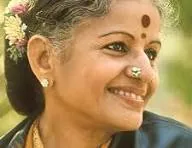
M.S. Subbulakshmi — Voice of Devotion
Madurai is one of the oldest continuously inhabited cities on earth — a city where Tamil civilisation has expressed itself in temple, literature, mathematics and music without interruption for over two thousand years. The Meenakshi Amman temple at its centre has been a crucible of Tamil cultural life since the Sangam period. It is exactly the right place for a musical genius to be born.
Madurai Shanmukhavadivu Subbulakshmi — known to the world as MS, and to her family as Kunjamma — was born on 16 September 1916 in Madurai, in what was then the Madras Presidency. She was born into music. Her mother, Shanmukavadiver Ammal, was a renowned veena player from the devadasi community — a hereditary group of women musicians and dancers dedicated to temple service who were, for many centuries, the primary custodians of the classical performing arts in South India. Her grandmother Akkammal was a violinist.
The devadasi tradition is a complex and contested one — a system that combined genuine artistic mastery with social and institutional dimensions that reformers rightly challenged. But its artistic legacy is undeniable: the devadasi tradition preserved and transmitted the Carnatic repertoire, the Bharatanatyam vocabulary, and the deep knowledge of raga that underpins the entire classical performance tradition of Tamil Nadu. MS Subbulakshmi was born at the intersection of this inheritance and the modernising currents of early 20th-century Tamil society — and spent her life transforming what she received into something that transcended the circumstances of its transmission.
Growing up in this environment, the young Kunjamma was immersed in music from birth. She had regular conversations with some of the greatest musicians of the era — Karaikudi Sambasiva Iyer, Ariyakudi Ramanujaiyengar, Mazhavarayanendal Subbarama Bhagavathar — figures whose names are inscribed in the history of Carnatic music. The exposure was extraordinary and the learning was constant.
II. The Formation — Semmangudi and the Discipline of the Tradition
Her first training was from her mother. But the decisive influence on her formal musical education was Semmangudi Srinivasa Iyer — one of the greatest Carnatic vocalists of the 20th century, a recipient of the Sangita Kalanidhi, whose teaching shaped several of the finest musicians of his generation. It was under his guidance that the young MS developed the technical foundation that would make her voice, in the words of Ustad Bade Ghulam Ali Khan, the Suswaralakshmi — the goddess of the perfect note.
Carnatic music is a demanding discipline. The raga system — with 72 parent scales (melakarta ragas) and hundreds of derived ragas, each with its own characteristic phrases (gamakas), its own emotional register (bhava), its own appropriate time of day and season — requires years of systematic study before a performer can even begin to express the music's full potential. The technical elements alone — brigas (fast-running phrases), swaras (sol-fa passages), neraval (melodic variations on a text line) — take years to master. On top of this comes the vast repertoire: the compositions of Tyagaraja, Muthuswami Dikshitar, Syama Sastri (the Trinity of Carnatic music), the Divya Prabandham of the Alwars, the padam and javali of the devadasi tradition, the compositions of Purandaradasa, Annamacharya.
MS absorbed all of this and went further. She also studied Hindustani classical music under Pandit Narayanrao Vyas — giving her an unusually broad mastery that allowed her, in later years, to sing in Sanskrit, Hindi, Telugu, Gujarati, Bengali, Malayalam and several other languages while maintaining absolute fidelity to the musical tradition of each.
Her first public performance came in 1927 at the Thayumanaswami Temple in Tiruchirappalli, at the age of eleven — in the company of the violinist Mysore Chowdaiah and mridangam player Dakshinamurthy Pillai. Two years later, in 1929, she performed at the Madras Music Academy at the age of thirteen — the Academy's discriminating selection committee breaking tradition to invite a young girl as a key performer. By seventeen she was giving concerts independently, including major performances at the Music Academy. The musical world had recognised something exceptional.
III. Cinema — The Unlikely Platform
In 1938, MS Subbulakshmi entered Tamil cinema with Sevasadanam — a film based on a story about the devadasi system itself, in which she played a married woman driven by her husband's cruelty into prostitution, who ultimately gives up that life to devote herself to running an institution for the children of prostitutes. It was a socially serious film, and it was a commercial and critical success. At twenty-two, she was already a star.
She went on to appear in five films. In 1941, she played the male character of Narada in the film Savithri — specifically to raise money to fund her husband T. Sadasivam's nationalist Tamil weekly magazine Kalki. The willingness to take on a male role, at a time when such gender-crossing in performance was uncommon, speaks to both her confidence in her own artistry and her commitment to her husband's cultural and political project.
In 1940, MS had married T. Sadasivam — a Gandhian nationalist, writer, and cultural visionary who would become the great enabler of her career. Sadasivam understood both the depth of her talent and the scale of the platform it deserved. His organisational energy and cultural connections — in a period when India was moving rapidly toward independence and the question of what Indian civilisation meant was live in every cultural forum — helped shape the extraordinary international career that followed.
Her last film, Meera (1945), directed by Ellis Dungan, gave her national prominence. She played the Rajasthani saint-poetess Mirabai — a woman who defied family and caste to sing her devotion to Krishna regardless of social consequence. The role was, in many ways, a mirror of her own artistic identity: the singer whose devotion to the music transcends every social constraint. The Tamil film was so successful it was remade in Hindi in 1947.
IV. Gandhi, Nehru and the Nation — A Voice for the Moment
The story of Mahatma Gandhi and MS Subbulakshmi is one of the most revealing anecdotes in Indian cultural history. Gandhi had heard her recordings and had a particular attachment to the bhajan Hari Tum Haro. He asked her to sing it for him. When she admitted she did not know it, Gandhi said — and this is documented — that he would rather hear her recite the words than have anyone else sing them. She learned the bhajan overnight and recorded it.
When Gandhi was assassinated on 30 January 1948, All India Radio — which had been founded on the principle of broadcasting Indian cultural excellence — chose MS Subbulakshmi's recording of Hari Tum Haro as the tribute played in the aftermath of the assassination. The voice that had recorded the bhajan for Gandhi was now, in the most terrible circumstances, offering it back to the nation.
Who am I, a mere Prime Minister before a Queen — a Queen of Music.
— Pandit Jawaharlal Nehru, on MS Subbulakshmi
Nehru's remark is often quoted, but it is worth pausing on. It was not flattery — it was a recognition that in the hierarchy of what India's civilisation had produced, musical mastery of the highest order stood above political authority. In the context of newly independent India, where the question of what the new nation's cultural identity should be was intensely debated, MS Subbulakshmi's voice was one of the clearest answers: this is what we are, and this is what we have always been.
V. The Voice — What Made It Extraordinary
The tributes paid to MS Subbulakshmi by the greatest musicians of her time form an extraordinary litany. Each tries to name something that finally resists naming.
Lata Mangeshkar called her Tapaswini — the Renunciate. The word implies not merely abstinence but a quality of purity achieved through discipline so total it transforms the person who practices it. Lata was recognising in MS a quality of spiritual authenticity that went beyond technique.
Ustad Bade Ghulam Ali Khan — the greatest Hindustani vocalist of his generation, a musician whose standards were severe — called her Suswaralakshmi: the goddess of the perfect note. From a master of a different but equally demanding tradition, this is a precise technical tribute: her intonation, her control of each note within the raga's framework, was divine in its accuracy.
Kishori Amonkar, the great Jaipur-Atrauli vocalist, described her as Aathuvaan Sur — the eighth note, above the seven notes basic to all music. This is a poetic and metaphysical tribute: MS was not merely a master of the seven notes that constitute the musical universe but a presence that transcended the system itself, pointing toward something beyond what the system can contain.
Sarojini Naidu called her the Nightingale of India. The image is simple but it has stuck for eighty years — because it captures something about the quality of naturalness in her voice. She did not sound like a trained singer performing difficult material. She sounded like a creature for whom this was the most natural thing in the world.
MS Subbulakshmi in Her Own Words
"Indian music is oriented solely to the end of divine communication. If I have done something in this respect, it is entirely due to the grace of the Almighty who has chosen my humble self as a tool."
This single statement — made at the peak of her fame, when the tributes of the world's greatest musicians had already established her as a figure without peer — reveals the quality that all those tributes were trying to name. For MS, the voice was not hers. It was the instrument of something beyond her. The discipline of the music was not self-expression but self-effacement — the removal of everything that stood between the raga and the listener.
VI. Edinburgh, Carnegie Hall, the United Nations — Carrying Tamil Music to the World
The 1963 invitation to perform at the Edinburgh International Festival of Music and Drama was a landmark — the first time a Carnatic musician had appeared at one of the world's most prestigious international music festivals. Edinburgh, in August, was the cultural capital of the world — every significant musician, theatre company, and literary figure converged on the city's concert halls and venues. MS Subbulakshmi's presence there was not merely a performance; it was an argument, made in sound, that the classical tradition of South India belonged in the same conversation as European concert music.
But the greatest moment came on 23 October 1966. At the invitation of U Thant, the Secretary-General of the United Nations, MS Subbulakshmi became the first Indian to perform at the UN General Assembly. She sang on United Nations Day, in the General Assembly hall in New York — before the assembled representatives of every nation on earth.
The composition she chose as the centrepiece of her performance was Maitreem Bhajata — a Sanskrit benediction composed by Chandrasekharendra Saraswati, the Sage of Kanchi (the 68th Shankaracharya of the Kanchi Kamakoti Peetam, her own revered guru and spiritual guide). The composition's central message — O World, cultivate peace; abandon all enmity — was chosen with extraordinary precision for the occasion. A Sanskrit text, set to a Carnatic raga, composed by a Tamil spiritual master, performed by a Tamil singer from Madurai, addressed to the world from the floor of the United Nations: this is Tamil civilisation's contribution to the human conversation about how to live.
She went on to perform at Carnegie Hall, New York in 1977, the Royal Albert Hall, London in 1982, and the Festival of India in Moscow in 1987. Each of these performances introduced Carnatic music to audiences that had never encountered it — and the reception in each case was not polite appreciation for a novelty but genuine recognition of a great musical intelligence.
VII. The Devotional Recordings — What Every South Indian Morning Begins With
For all her international performances, MS Subbulakshmi's deepest legacy lives in the recordings that are part of daily life across South India and the Tamil diaspora. Almost every household that maintains any connection to the tradition begins its morning with one of her recordings.
The Venkatesa Suprabhatam — the morning hymn of Lord Venkateswara at Tirupati, traditionally sung to wake the deity — is MS Subbulakshmi's most widely heard recording. She recorded a 20-minute version for His Master's Voice, and arranged for all royalties from it to go to the Veda Patasala run by the Tirupati Tirumala Devasthanam. It is estimated that tens of millions of people hear this recording every morning — in homes, in temples, from the speakers of neighbourhood temples at dawn across Tamil Nadu, Andhra Pradesh and the diaspora.
Her recording of Bhajagovindam — the composition of Adi Shankaracharya, set to music — is similarly ubiquitous. And her Vishnu Sahasranamam, the thousand names of Vishnu, has become the standard by which all other renditions are measured. These are not merely recordings; they are the sonic environment of devotional life for an entire civilisation.
She also recorded the Meenakshi Pancharatnam — five hymns to the goddess of Madurai, the city of her birth — and the Annamacharya kritis celebrating Lord Venkateswara. Her recordings helped resurrect the Annamacharya repertoire for a modern audience, contributing to the scholarly and musical revival of a composer whose work had been largely forgotten.
VIII. The Awards — A Life Recognised
India's third-highest civilian honour — among the first musicians to receive it
For Carnatic music — vocal
Madras Music Academy's highest honour — first woman to receive it
Asia's Nobel Prize — first Indian musician to receive it, for Public Service
India's second-highest civilian honour
Government of Madhya Pradesh — for contribution to classical arts
For National Integration — recognising her role as a unifying cultural force
India's highest civilian honour — first musician ever to receive it. She was 82.
The Bharat Ratna in 1998 came when she was 82 years old — a life of recognised eminence reaching its formal pinnacle in old age. The citation acknowledged both her unparalleled contribution to Indian classical music and her role as a cultural ambassador whose work had carried Indian civilisation to the world's most prestigious stages.
After her husband T. Sadasivam's death in 1997, she stopped giving public performances. She passed away on 11 December 2004 in Chennai. The United Nations issued a commemorative postage stamp for her birth centenary. A bronze statue was installed in Tirupati by the temple authorities — the temple authorities of the very deity whose morning hymn she had made the soundtrack of millions of mornings.
IX. The Charity — A Voice in Service
MS Subbulakshmi gave more than 200 charity concerts across her career and raised over one crore rupees — an enormous sum in the mid-20th century. She donated the prize money from virtually all her major awards to charitable organisations: the Ramakrishna Mission, Bharat Seva Samaj, the Indira Gandhi Memorial Trust, educational initiatives for underprivileged children in Tamil Nadu.
This was not a sideline to her musical career. It was an expression of the same understanding that animated her music: the voice was not hers, and its fruits were not hers either. The royalties from the Venkatesa Suprabhatam went to the Veda Patasala — not to her. The prize money went to charity — not to her. She was, as she herself said, a tool. The grace that flowed through the tool belonged to those it reached.
X. What She Meant — Tamil Civilisation's Offering to the World
MS Subbulakshmi was born into a community that was, at the time of her birth, socially marginalised — the devadasi tradition was under attack from social reformers who correctly identified exploitation within the system even as they sometimes failed to distinguish it from the extraordinary artistic legacy it had produced. By the end of her life, she had become India's most honoured musician — the first ever to receive the Bharat Ratna — and a figure who had performed for the United Nations, for the British Royal Family at the Albert Hall, for audiences in Moscow and New York and Edinburgh and Tokyo.
This trajectory is not merely a personal story of triumph. It is a story about what Tamil civilisation is capable of producing when its deepest traditions — the musical, the devotional, the philosophical — are given space to express themselves fully. The voice that sang Maitreem Bhajata in the UN General Assembly in 1966 was carrying a message that had been formed over thousands of years in the temples and concert halls of Tamil Nadu: that music in its highest form is not entertainment, not self-expression, not cultural nationalism, but divine communication — a way of touching the ground of being that underlies all human division.
The Aandaal Project honours MS Subbulakshmi as the greatest ambassador Tamil musical culture has ever produced — and as a figure whose life demonstrates that the deepest traditions of Tamil civilisation are not merely heritage to be preserved but a living gift to the world.
Almost every household in South India begins its day with MS's Bhajagovindam, Bhavayami, and Suprabhatam. The depth of her music was powerful enough to evoke a sense of spirituality in her listeners. This is the measure of a life in music: not the stages or the awards, but the mornings. The tens of millions of mornings across seven decades on which her voice has been the first sound of the day.
Tamil Heritage Music on andal.io
Explore the full heritage of Tamil music, arts and culture — Ilaiyaraaja · AR Rahman · Bombay Jayashri
The Spiritual Tradition She Sang Within
MS Subbulakshmi was a devoted student of Kanchi Paramacharya — whose composition Maitreem Bhajata she sang at the United Nations. Explore the Guru Support Network →
Further Listening
Venkatesa Suprabhatam — the morning hymn, recorded for HMV. Royalties go to Tirupati Veda Patasala.
Bhajagovindam — Shankaracharya's composition, her most universally known recording.
Vishnu Sahasranamam — the thousand names of Vishnu, the benchmark recording of this text.
Maitreem Bhajata — the composition of Kanchi Paramacharya, performed at the UN General Assembly, 23 October 1966. Available on YouTube.
Meera Bhajans — the devotional songs of Mirabai, from the 1945 film Meera and subsequent recordings.