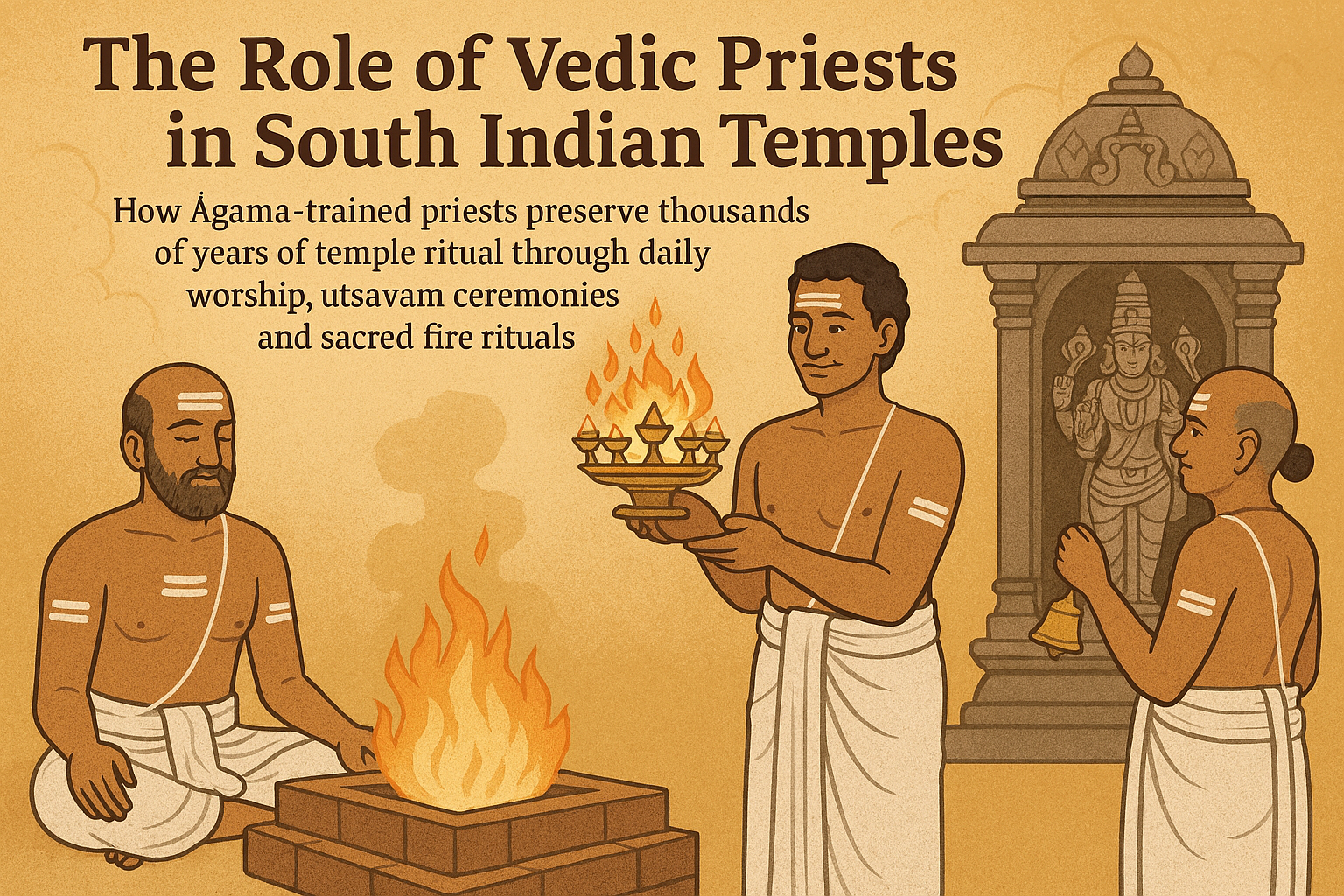
For over 3,000 years, the Vedic priest — the pujari, the archakar, the dikshitar — has been the living bridge between the divine and the devotee. In Tamil Nadu's great temple complexes, from Chidambaram to Thiruvannamalai, these custodians of sacred knowledge maintain daily rituals that have continued without interruption through empires, invasions and centuries of change.
Who Are Vedic Priests?
Vedic priests in South India are broadly trained in two great streams:
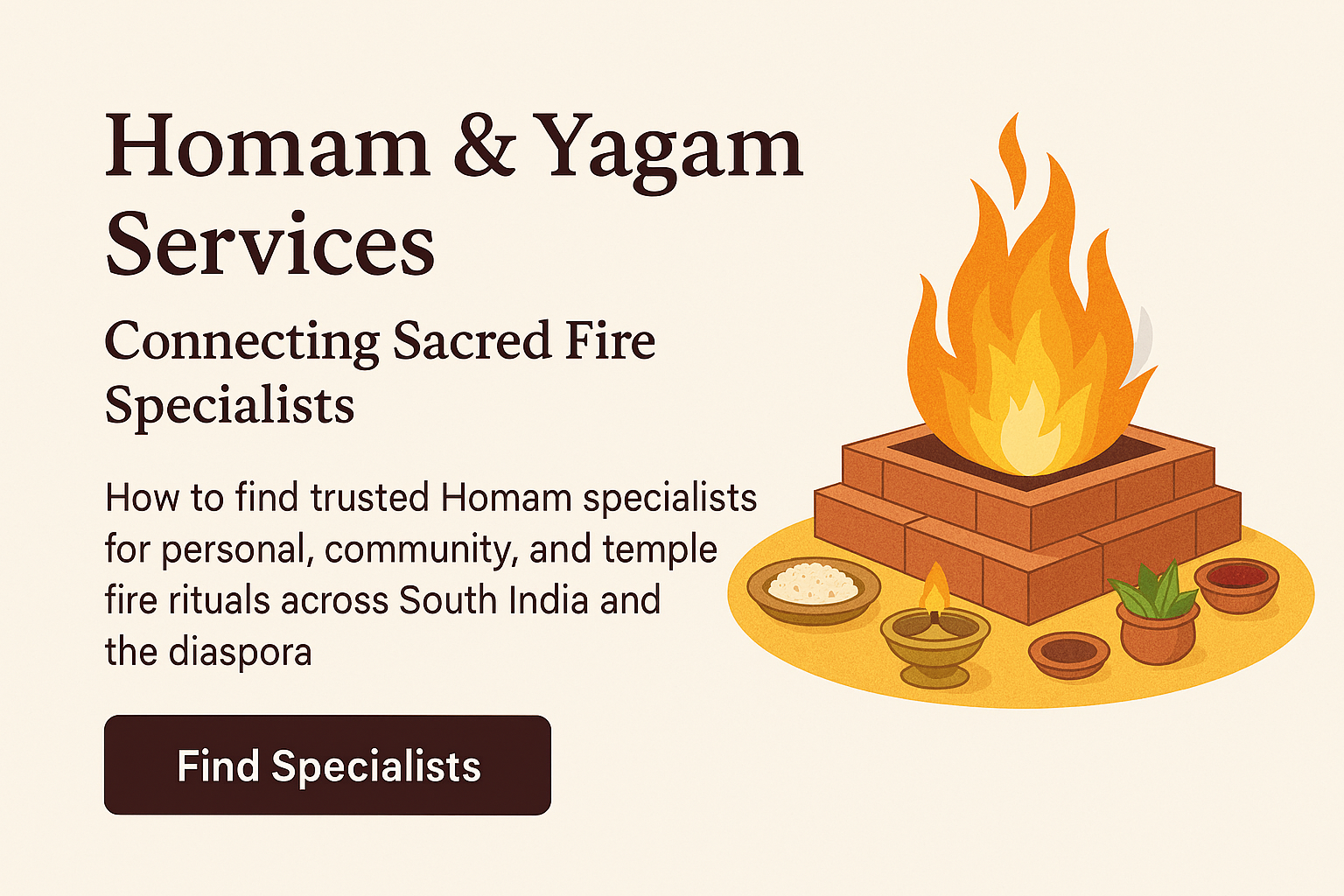
- Vaidika priests — trained in the oral Vedic tradition, specialising in fire rituals (homam), recitation of the four Vedas, and domestic rites (samskaras) such as naming ceremonies, upanayanam (thread ceremony), and marriages.
- Agama priests (Archakas) — trained in the Agama Shastras, the sacred manuals that govern temple worship. Every gesture, every flower placement, every lamp waved before the deity follows rules codified in texts that predate the Common Era.
The Daily Life of a Temple Priest
A typical archaka at a major Shaiva temple wakes before dawn for the Thiruvanandal — the first of six daily services (kaala puja). Each service involves bathing the deity, adorning the idol with fresh flowers and silk, waving lamps (deepa aradhana), offering food (naivedyam), and reciting hymns. The entire sequence can take three hours for a single kaala puja.
Services a Vedic Priest Can Perform
Home Rituals (Grihya Karma)
- Ganapati Homam — for new beginnings and removing obstacles
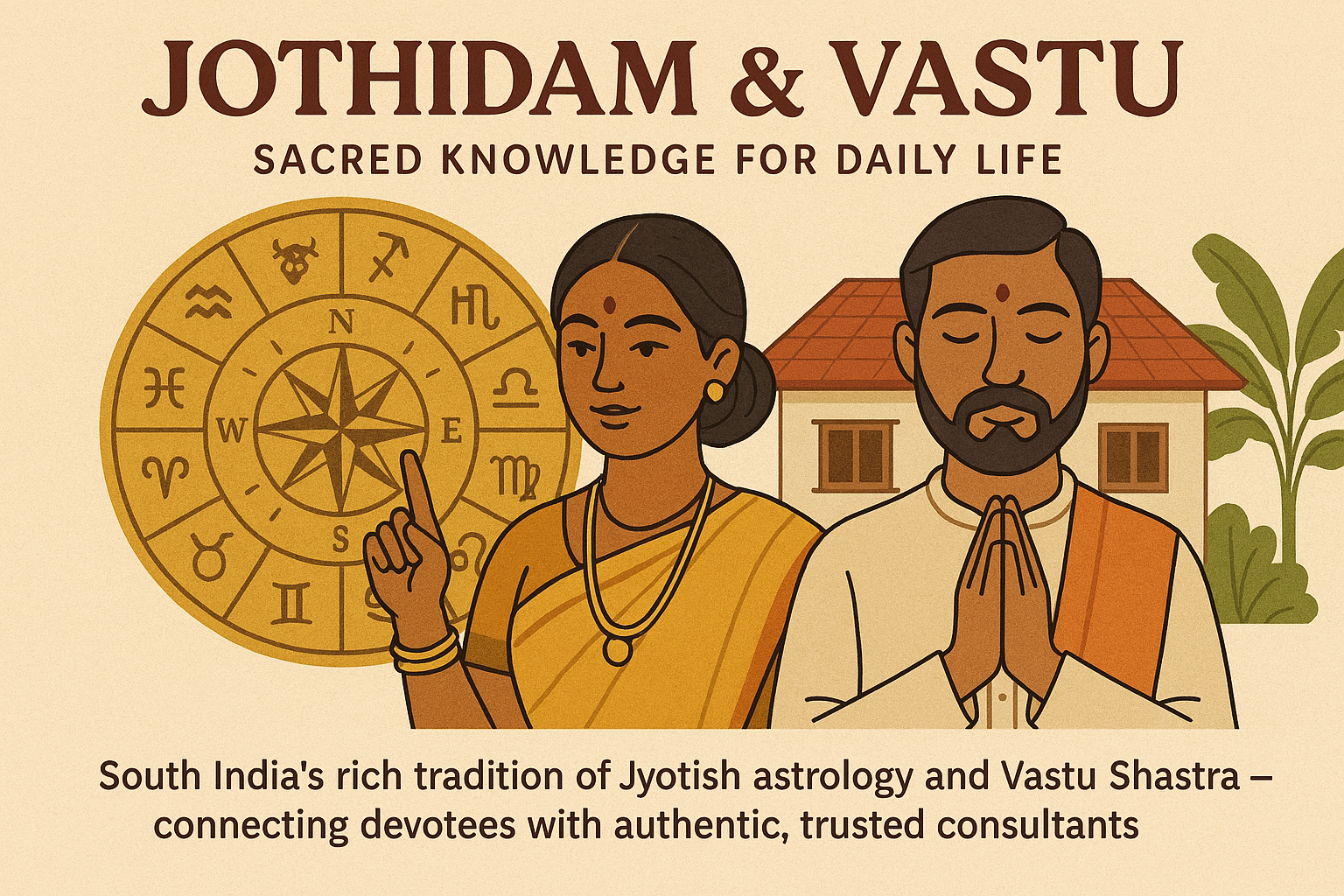
- Navagraha Shanti — planetary appeasement rituals
- Satyanarayana Puja — thanksgiving and prosperity
- Vastu Shanti — house-warming and purification
- Vivaha (Marriage) ceremonies in full Vedic tradition
- Upanayanam (Sacred thread ceremony)
- Shodasha Samskaras — all 16 life-passage rites
Community & Temple Rituals
- Brahmotsavam (Annual temple festival, 10–21 days)
- Kumbhabhishekam (Temple consecration/re-consecration)
- Ekadasha Rudrabhishekam — 11 priests reciting Rudram simultaneously
- Athi Rudra Maha Yajna — the grandest of all Vedic fire rituals
🙏 How to Choose the Right Vedic Priest
- Confirm their training — Vaidika (recitation/homam) or Agamic (temple service)
- Ask which Veda they are trained in — Rig, Sama, Yajur or Atharva
- For temple consecrations, ensure they hold certification from the Hindu Religious and Charitable Endowments (HR&CE) Board
- For overseas ceremonies, check visa documentation support and travel experience
- Request a reference from a temple or family they have served before
Preserving Vedic Knowledge in the Modern World
The UNESCO Oral Heritage list includes Vedic chanting as an Intangible Cultural Heritage of Humanity — one of only a handful of living oral traditions to receive this recognition. Yet the pipeline of trained priests is under pressure. Many families that traditionally entered priestly lineages are now choosing other careers, and the years of training required — often 12 or more years of gurukul education — make it a demanding vocation.
Organisations like The Aandaal Project are working to make Vedic priests more discoverable, connect them with diaspora communities, and ensure that families worldwide — whether in Chennai, London, Toronto or Singapore — can access authentic, qualified priests for their most sacred moments.
Finding a Vedic Priest Through andal.io
The Hindu Service Pillar on andal.io is South India's emerging sacred services directory. Priests registered here have verified Booking IDs and public profiles. You can search by service type, location, and availability — and contact them directly via WhatsApp for enquiries.