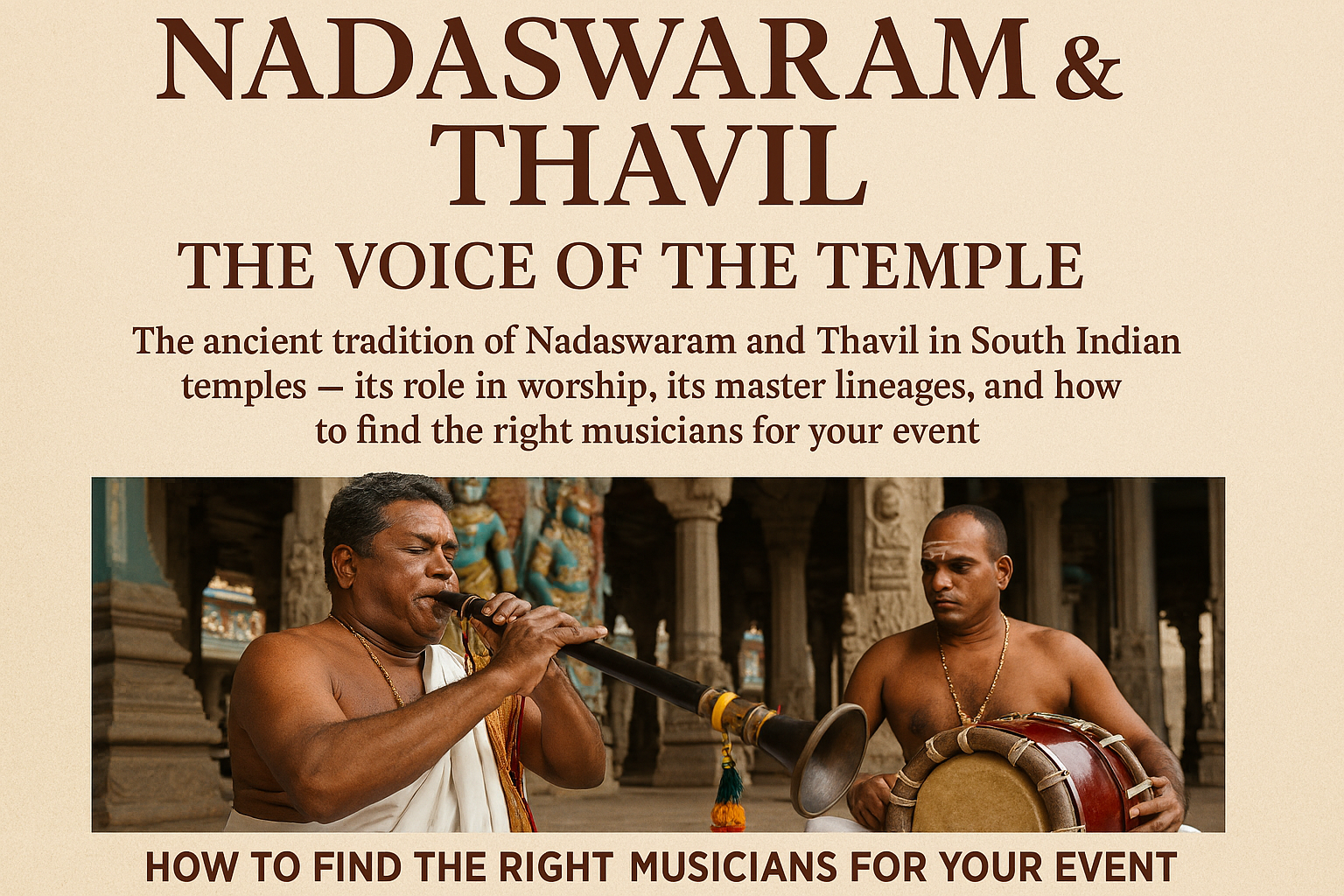
If there is one sound that has defined South Indian temple culture for over two millennia, it is the Nadaswaram — the nagaswaram — a double-reed wind instrument whose resonant, soaring voice carries the sacred sound of Shiva's breath across temple courtyards, wedding halls and festival grounds.
The Nadaswaram: Sacred Sound of the Tamil Temple
The Nadaswaram is among the world's oldest double-reed instruments still in continuous use. Classified as a mangala vadyam (auspicious instrument), it is played at virtually every significant South Indian Hindu ceremony — temple kumbhabhishekam, brahmotsavam, weddings, and the golden or silver jubilee celebrations of community institutions.
Nadaswaram and Thavil: An Inseparable Pair
The Nadaswaram is never played alone in a temple context. It is always paired with the Thavil — a barrel drum of immense power and precision. The Thavil player provides the rhythmic foundation; the Nadaswaram player soars above it. Together, they create what classical musicians call melam — the ensemble. A full melam typically includes:
- One lead Nadaswaram player (the vadhyar)
- One second Nadaswaram player (following and harmonising)
- One or two Thavil players
- An ottu drone player (a shorter Nadaswaram held at a fixed pitch)
Occasions That Require Nadaswaram
Temple Ceremonies
- Kumbhabhishekam and re-consecration ceremonies
- Brahmotsavam (annual festival processions)
- Rathotsavam (temple chariot festival)
- Daily temple utsavams in major Agamic temples
Life Events
- Tamil Hindu weddings — from tying the thali to the reception
- Upanayanam (thread ceremony)
- Sashtiabdhapoorthi (60th birthday celebration)
- Sadabhishekam (80th birthday — especially auspicious)
🎵 What to Ask When Booking a Nadaswaram Ensemble
- Is the lead player a trained vidwan from a recognised lineage or music institution?
- Can they play in the specific ragas required for your ceremony (e.g. Nattai for morning, Bilahari for auspicious events)?
- Do they provide their own Thavil player, or do you need to arrange separately?
- What is the standard duration per session, and what is the rate for extended performances?
- For overseas events — do they have experience performing in air-conditioned venues (humidity affects the reed)?
The Masters and Their Legacy
The tradition of Nadaswaram has produced towering figures in Indian classical music. T.N. Rajarathinam Pillai is considered the father of modern Nadaswaram performance; his recordings from the 1940s–70s remain standards. Sheik Chinna Moulana was the first Nadaswaram artist to receive the Padma Bhushan. Today, artists from the Valangaiman, Sirkazhi, and Thiruvarur traditions continue this legacy.
Yet the number of young musicians entering this demanding field is declining. Nadaswaram requires years of practice — the breath control alone takes three to five years to develop. The Aandaal Project's Hindu Service Pillar is committed to making master Nadaswaram artists more visible, better compensated, and more connected to the global Tamil diaspora that values their art.