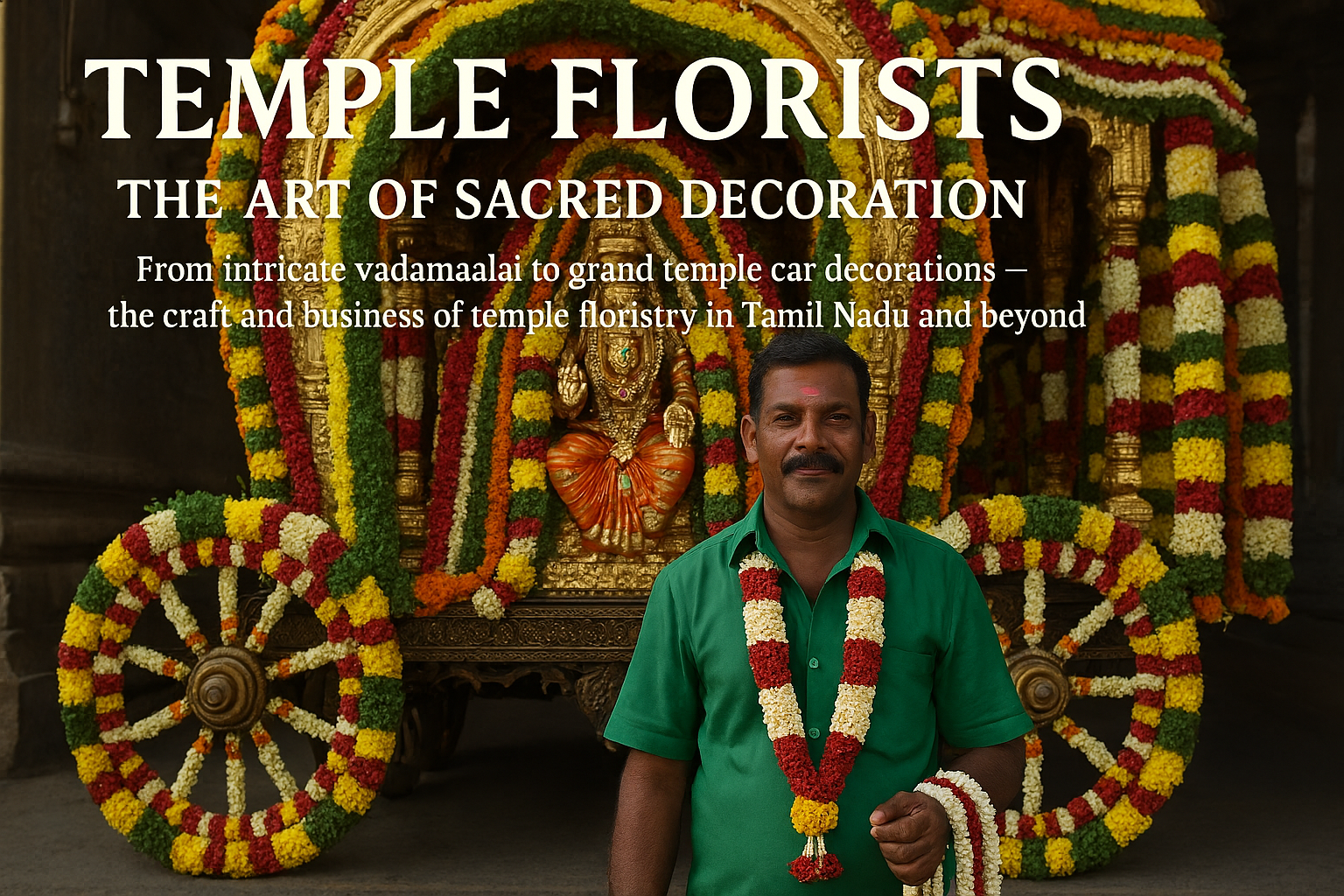
Walk into any South Indian temple at dawn and you are enveloped by fragrance before you see the deity. Jasmine, marigold, rose, kanakambaram — the air itself becomes an offering. Behind this sacred transformation stands the temple florist: an artisan whose work is as much devotion as craft.
Flowers as First Language of Devotion
In the Tamil Bhakti tradition, flowers are not merely decorations — they are a primary medium of worship. The Divya Prabandhams of the Alvars are full of flower imagery; Aandaal herself wore the garland meant for Perumal before offering it, an act of breathtaking intimacy that is commemorated every day in Srivilliputhur. Flowers are pushpa — the first of the five core offerings (pancha upachara) in Agamic worship.
The Art of the Sacred Garland
Temple garland-making is a distinct craft tradition. The most important garlands in South Indian temple culture include:
- Vadamaalai — the long garland worn by the processional deity, often 6 to 12 feet long, woven from hundreds of individual blooms
- Tulasi maalai — sacred basil garlands for Vaishnava deities, requiring special handling and early-morning preparation
- Kanakambaram (Crossandra) garlands — the signature orange flower of Tamil temple worship, woven into thick, fragrant ropes
- Malligai (Jasmine) garlands — the most prized offering, hand-threaded at dawn for freshness
- Arali (Oleander) — traditionally offered to Shiva, requiring precise quantity and placement
Temple Car Decorations
The most spectacular expression of temple floristry is the decoration of the ther — the temple chariot — during Rathotsavam. A single temple car can require:
- 20,000 to 50,000 individual flowers
- A team of 10–30 florists working overnight
- Kilometres of threaded garland
- Intricate floral sculptures of elephants, peacocks, and lotus forms built on bamboo frames
The Thiruvarur Thyagaraja temple car, one of the largest in the world, requires an entire week of floral preparation by a dedicated team of master florists.
🌸 For Events: What a Temple Florist Can Create
- Wedding mandap decoration in traditional or contemporary style
- Reception stage backdrops — full floral walls, arches and canopies
- Nalangu (pre-wedding ceremony) trays and arrangements
- Baby shower (Valaikappu) floral decoration
- Temple festival decoration and deity garlands
- Funeral flower arrangements in traditional Tamil custom
Sustainability and the Future of Sacred Floristry
Temple floristry faces a dual challenge: the environmental impact of large-scale flower use and the economic pressure on small-scale artisan florists from cheap imported alternatives. Several temple florists registered with The Aandaal Project are pioneering sustainable practices — using locally grown, chemical-free flowers, composting temple flower waste into natural fertiliser, and reviving rare heritage flower varieties that were historically used in worship.