
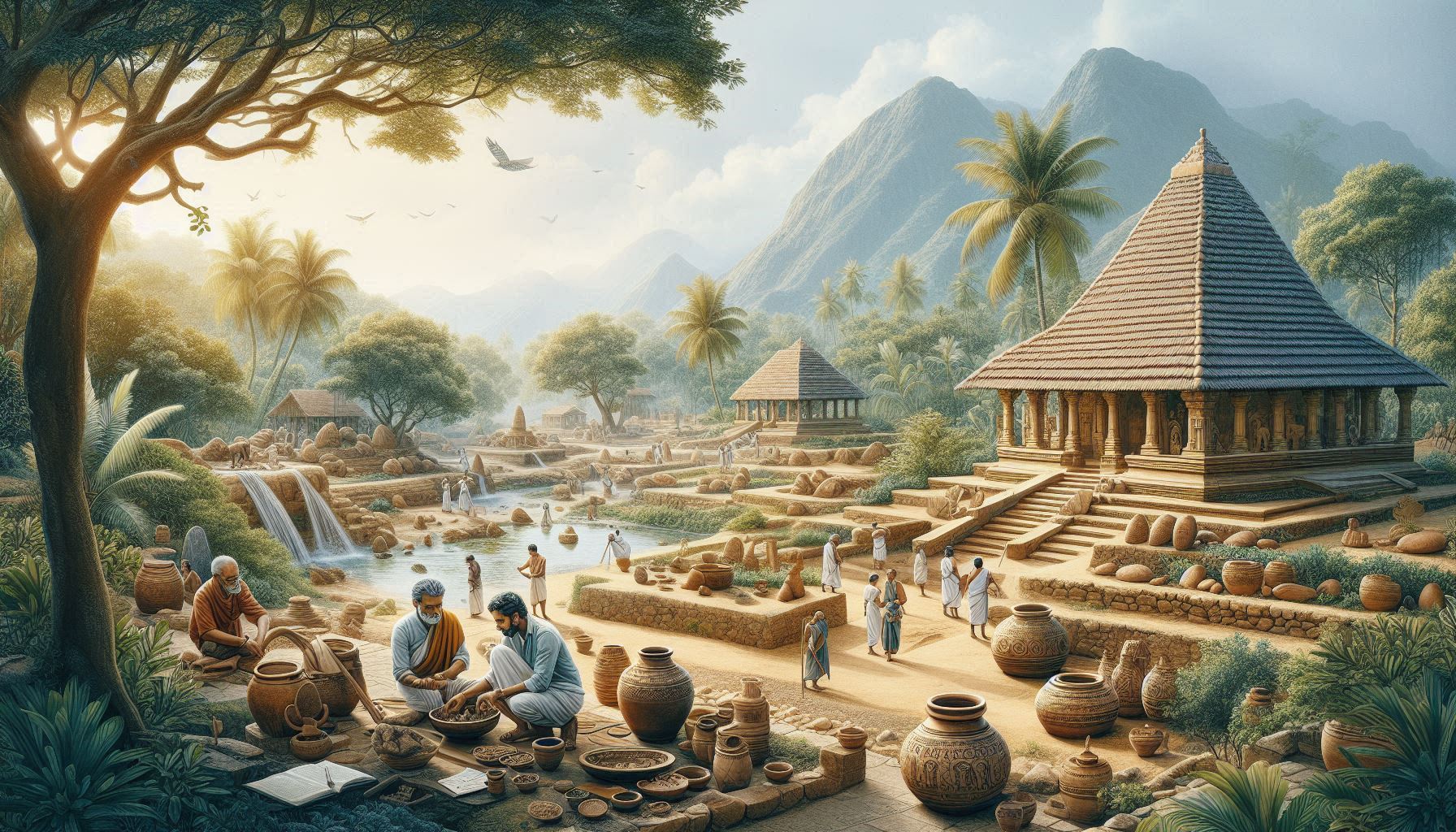
Keeladi (also spelled Keezhadi) is an excavation site near Madurai, on the Vaigai river basin. Over multiple excavation seasons, archaeologists have uncovered evidence of a large settlement with craft activity, everyday household life, and writing on pottery. It has become a major talking point because it offers physical evidence that connects to early Tamil history and the broader “Sangam-age” imagination — but it’s important to separate what’s firmly supported from what’s still being studied.
Plain-English takeaway: Keeladi matters because it shows an early, organised settlement with material culture (structures, pottery, tools, beads, and inscriptions) that helps scholars map how people lived in the Tamil region in early historic times — and possibly earlier, depending on dating results and ongoing research.
1) Where is Keeladi — and what type of site is it?
- Location: Near Madurai (Vaigai river basin), Tamil Nadu.
- Type: A habitation/settlement site (not just a burial site).
- Why that matters: Habitation layers can show daily life — housing, workspaces, tools, food habits, and trade.
2) The finds people talk about most
A) Built structures and “living space” indicators
- Brick structures and layout features that suggest planned activity areas.
- Water management (wells/drains reported across excavation notes and summaries).
- Household evidence: cooking/serving pottery, grinding stones, and small tools.
B) Writing on pottery: Tamil-Brahmi and graffiti marks
- Tamil-Brahmi inscriptions appear on pottery sherds in published excavation summaries.
- Graffiti symbols (marks not always “letters”) are also reported — these can be identifiers, owner marks, or cultural symbols.
- Why it matters: Writing on everyday objects strongly suggests literacy/use of labels in daily life.
C) Crafts, beads, and trade signals
- Beads (including carnelian/glass types in summaries) and small ornaments.
- Metal tools and production debris in some descriptions.
- Pottery types sometimes linked to wider Indian Ocean trade networks in academic/archaeology discussions.
Be careful with “trade” claims: A few “trade-marker” artefacts can suggest contact, but trade intensity and routes require careful context: stratigraphy, quantities, and comparative studies. It’s fair to say Keeladi is part of a wider early historic landscape — details keep evolving with research.
3) Dating: what’s verified, what’s debated
Dating is the most sensitive topic because it affects how people place Keeladi on the timeline. Archaeologists typically rely on a mix of: radiocarbon dates (where samples exist), stratigraphy (layering), and pottery/artefact comparisons with other dated sites.
A practical way to read the dating discussion
- Conservative reading: Some published reports align major habitation layers with the early historic/Sangam-era window.
- Earlier claims: Other public discussions suggest earlier dates based on later excavation seasons and lab tests.
- Ground rule: Prefer dates that are published with sample depth/context and lab method; treat viral headlines as “claims to verify.”
4) Why Keeladi matters to Tamil history and pride
Pride is understandable — Keeladi has become a symbol because it puts real objects and settlement evidence next to stories people already care about (Sangam literature, early Tamil identity, urban life, craftsmanship). But “pride” becomes stronger when it stays accurate and evidence-based.
- Material proof of early life: Homes, tools, pottery, writing — not just legends or later inscriptions.
- Everyday literacy signals: Names/marks on pottery suggest practical writing in normal life.
- Urban organisation: Settlement features hint at planning and specialised work.
- Bigger picture: Keeladi sits inside a wider chain of Tamil Nadu sites that together shape early historic history.
5) What we still don’t know (and what to watch next)
- More published, peer-reviewed detail: Wider publication helps independent researchers evaluate the evidence.
- Clear dating tables: More dates with context (sample depth, layer, method) will reduce confusion.
- Regional comparisons: How Keeladi relates to nearby sites in the Vaigai basin and Tamilakam landscape.
- Public interpretation: Museums and summaries often simplify — good for outreach, but always read the detailed reports too.
Want to support Tamil heritage — without any pressure?
Create your FREE Booking ID in ~15 seconds (no SMS, no calls). It’s a simple way to be counted in the early supporter community on andal.io.
Sources & further reading
If you want to keep this page “grounded”, link to primary excavation summaries and official releases. Here are practical starting points: